
 EN
EN

JIDE WQ3000 Universal Water Quality Analyzer: Advanced Relay Logic for Automated Chemical Dosing & Sensor Self-Cleaning
Introduction
In modern industrial water treatment, wastewater monitoring, and industrial process control, a transmitter is not just a data collector but the core hub of automated closed-loop systems. The next-generation JIDE WQ3000 Water Quality Analyzer (Industrial pH/Conductivity/DO/Turbidity Transmitter) has undergone a profound upgrade in relay control logic and operation modes, while maintaining high-precision measurement and multi-parameter compatibility. This evolution makes on-site automated dosing, limit alarms, and water quality sensor self-cleaning more accurate, intelligent, and stable.
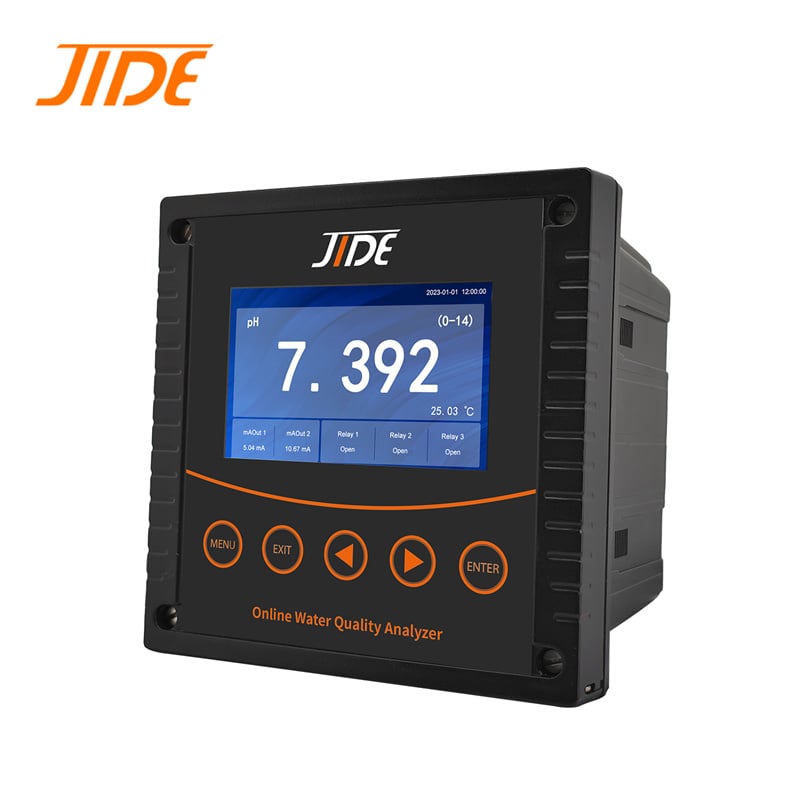
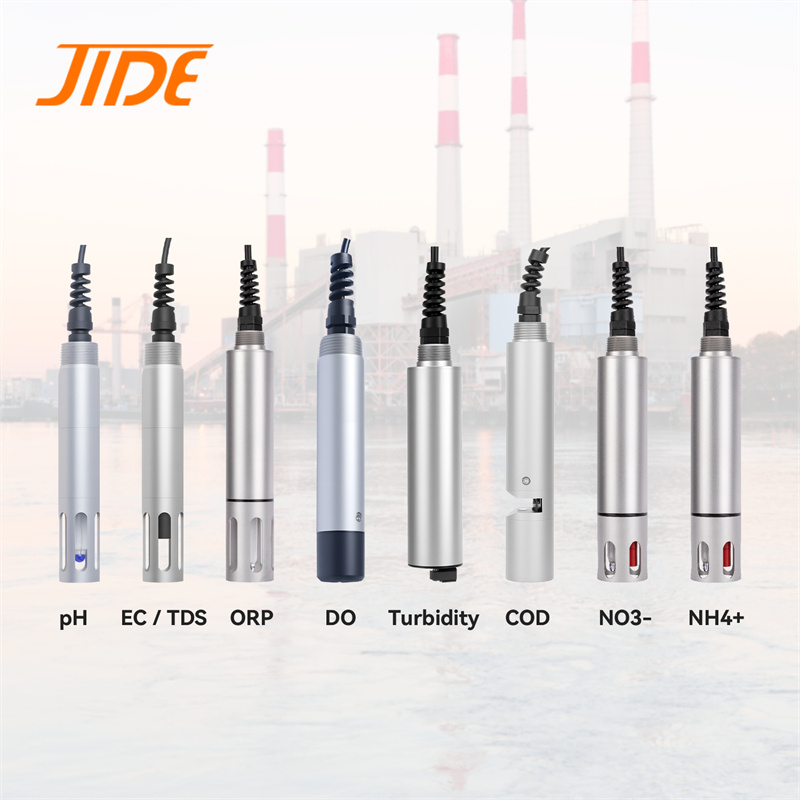
The new version, officially launched in September 2026, offers a comprehensive upgrade for online water monitoring at the same price point. It is compatible with all JIDE online detection parameters, including pH, ORP, conductivity, ammonia nitrogen, dissolved oxygen, and various ions. Perfectly suited for industrial production and wastewater treatment, it provides more precise control and user-friendly logic.
Core Highlights: Leap-forward Upgrade in Relay Control
To meet complex industrial linkage requirements, the new JIDE WQ3000 controller redefines relay output logic, evolving from a simple threshold switch to an intelligent control unit with advanced algorithms:
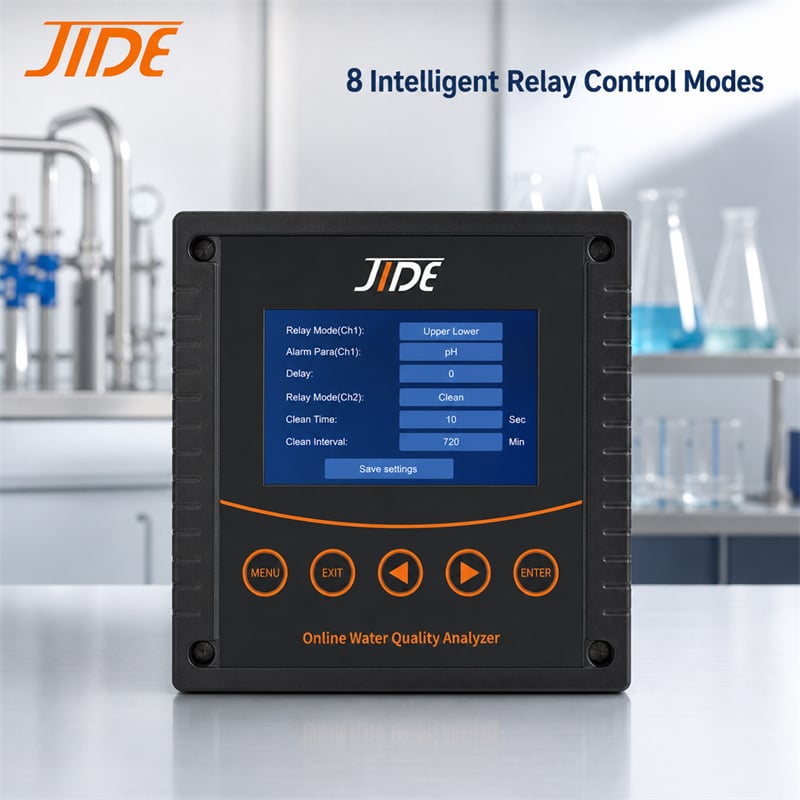
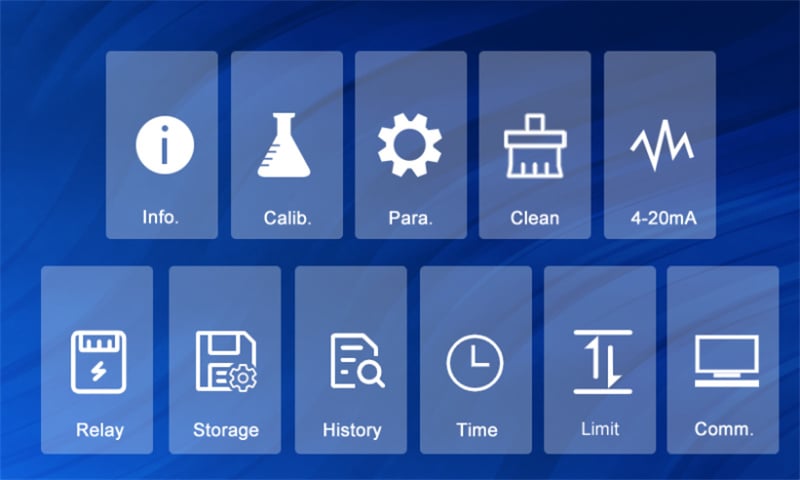
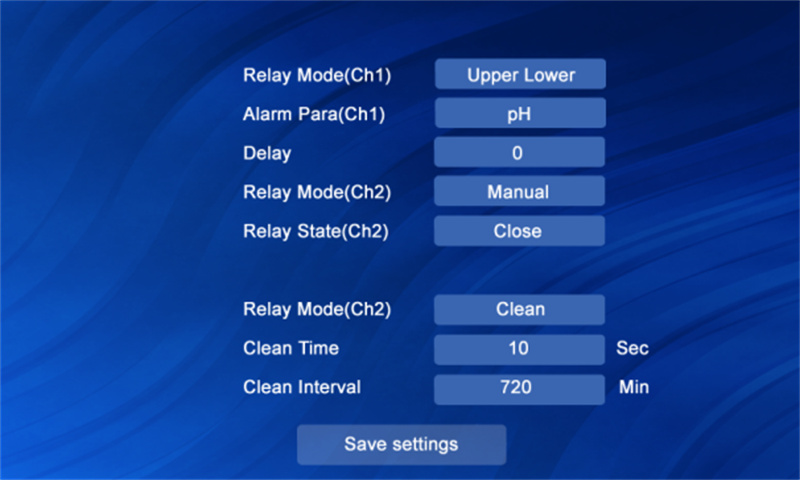
8 Expanded Control Modes: Beyond "Disabled," "Manual," and "Fault," it now supports "High Value," "Low Value," "Outside Range," "Inside Range," and "Cleaning." This ensures seamless handling of acid-base neutralization, disinfectant dosing, and concentration maintenance.
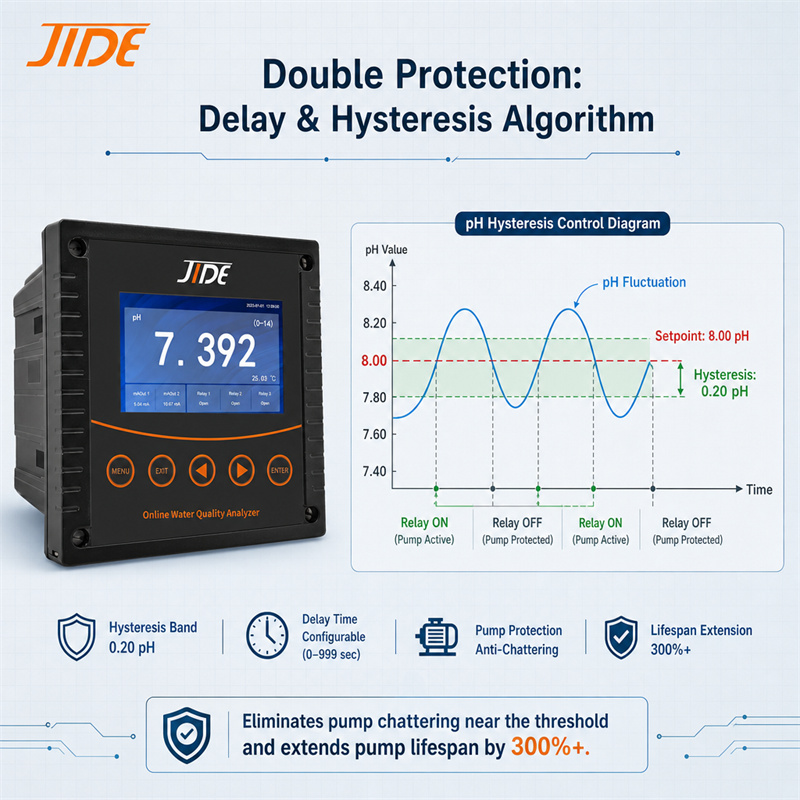
New Relay dosing control hysteresis algorithm Algorithm for Actuator Protection: The upgrade introduces "Hysteresis" parameter adjustment alongside delay settings. This prevents frequent relay switching caused by minor fluctuations, significantly extending the lifespan of dosing pumps and solenoid valves.
Advanced "Inside/Outside Range" Control: Supports dual-direction thresholds. The "Outside Range" mode triggers emergency discharge or dosing when water quality deviates, while "Inside Range" ensures stable circulation within the target interval.
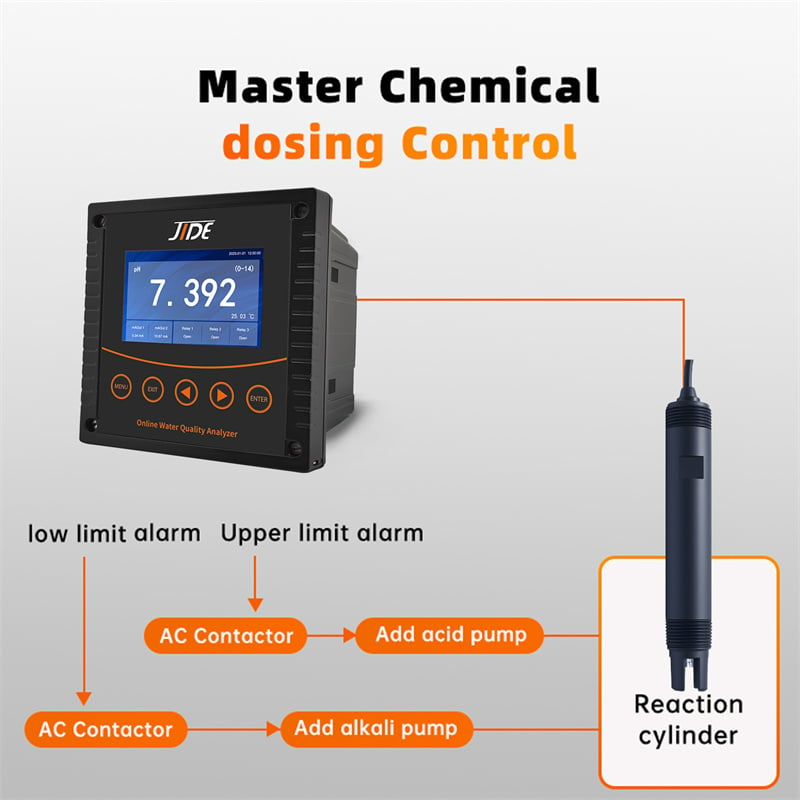
Independent "Cleaning" Cycle Control: A dedicated cleaning mode allows for independent configuration of cycles and intervals. It can trigger self-cleaning devices without an external PLC, ensuring probes remain scale-free and maintenance-free.
Control Mode Comparison
| Feature | Old Version | New JIDE WQ3000 | Typical Scenarios |
| Basic Modes | Disable, Manual, Fault | Disable, Manual, Fault | Maintenance testing, fail-safe interlocking |
| Threshold Control | Upper/Lower Limit | High/Low Value (w/ Hysteresis) | Single-direction dosing, aeration control |
| Range Control | Simple Union | Inside/Outside Range Mode | Circular water chemical window control |
| Probe Cleaning | Needs External Trigger | Built-in Independent Mode | Auto-cleaning for high turbidity water |
| Anti-Interference | Delay Only | Delay + Hysteresis Adjustment | Preventing pump/valve jitter, extending life |
Hardware and Communication Empowerment
• Multi-parameter Flexibility: The WQ3000 supports single, dual, and up to four-channel mixed digital/analog sensor inputs for pH/ORP, turbidity, MLSS, and more. WQ3000 series controller is a multi-parameter water quality monitor with cleaning cycle.
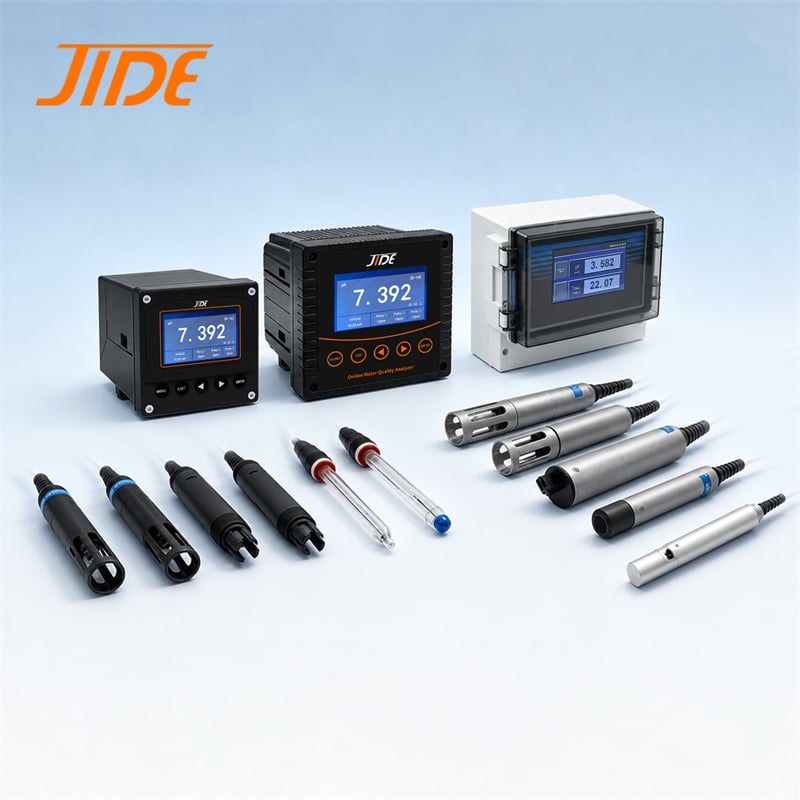
• High-Definition Interaction: Equipped with a 4-inch/3-inch color screen (800×480) and a self-developed Linux-based GUI. It features 3 SPDT relays, 2-channel 4-20mA output, and RS485 Modbus RTU for seamless real-time monitoring and cloud connectivity. The system includes massive internal storage for up to 100,000 data points.
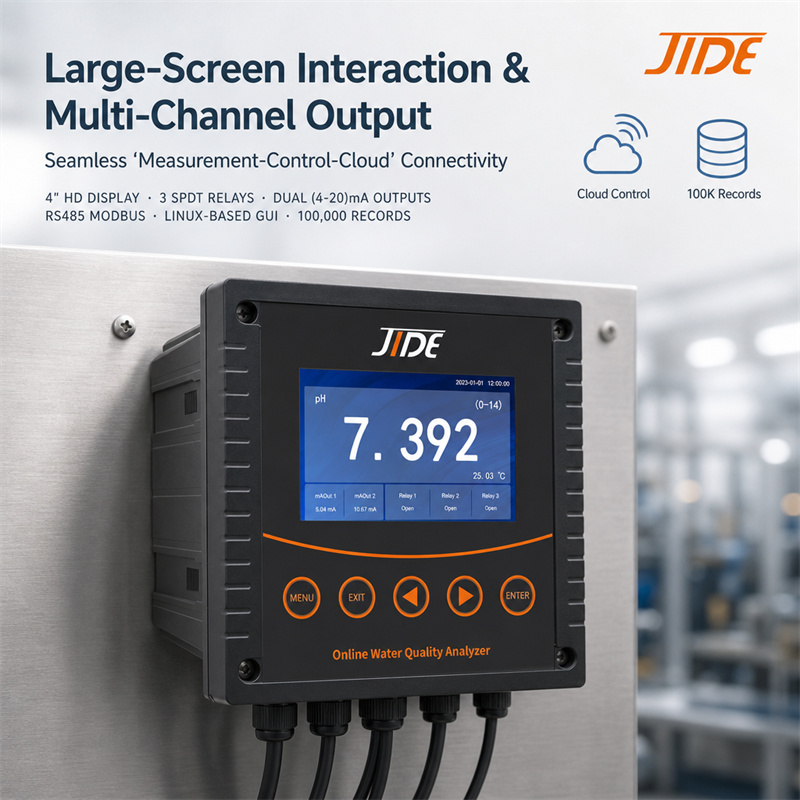
JIDE’s new WQ3000 series transmitter provides industrial engineers with a high-reliability, PLC-free, and cost-effective solution for on-site automation.