
 EN
EN

5-fold difference in operation and maintenance costs? Should online COD monitoring use chemical or sensor methods?
With increasingly stringent environmental policies worldwide, and mounting compliance pressures, COD, as a primary indicator for water quality monitoring, directly impacts compliance risks and operating costs through its selection and use.
This article will examine COD parameters, regulations, and principles to clarify the core differences and advantages/disadvantages between chemical-based and sensor-based online COD analyzers, helping you choose the right online COD analyzer.
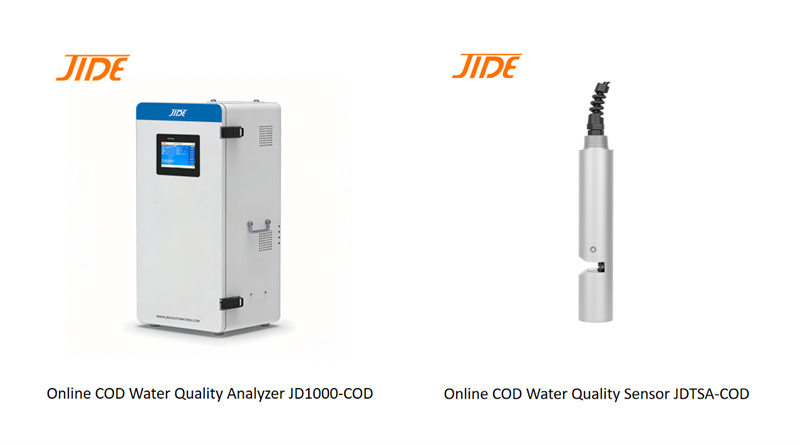
1. What is COD? Why is online COD monitoring so important?
1) Definition of COD (Chemical Oxygen Demand)
Under certain conditions, when a water sample is treated with a strong oxidant (usually potassium dichromate or potassium permanganate), the amount of oxidant consumed by all oxidizable reducing substances (mainly organic pollutants) in the water body is expressed as the mass concentration of oxygen (expressed in mg/L). Simply put, the more organic pollutants in the water, the more oxygen is needed to "completely remove" them. Therefore, the higher the COD value, the more severe the organic pollution of the water body.
2) Key Roles of COD:
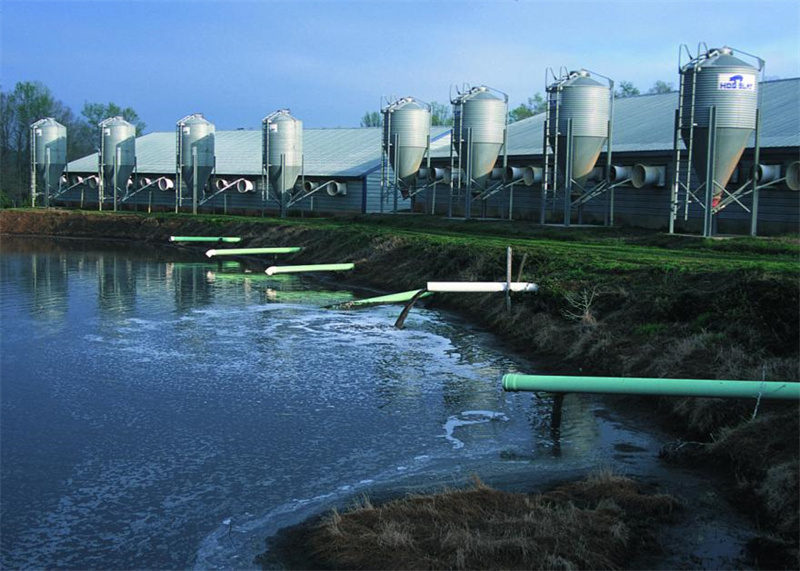
a. In the field of pollution source emissions: COD is the core indicator used by environmental protection departments worldwide (such as the Ministry of Ecology and Environment of China, the US EPA, and the European EEA) to measure whether industrial wastewater and urban sewage discharge meet standards. It can be said that COD is the primary standard for water quality assessment. Simultaneously, COD is the legal basis for environmental protection departments in various countries to calculate the total regional pollutant discharge limit (TMDL) of enterprises and to collect pollution discharge taxes/environmental taxes. Data directly relates to a company's legal compliance and the risk of fines;
b. In the wastewater treatment process: fluctuations in influent COD concentration directly determine whether there is sufficient "food" for activated sludge in biological treatment tanks (such as A2O, MBR processes), preventing shock loads from causing bacterial death or system collapse; precise control of aeration and dosing: aeration systems (blowers) are major electricity consumers in wastewater treatment plants. By monitoring COD changes, the aeration rate of blowers (DO control) and the amount of carbon source added (such as sodium acetate) can be adjusted in real time, avoiding the waste of electricity caused by over-aeration and the increased costs caused by over-dosing.
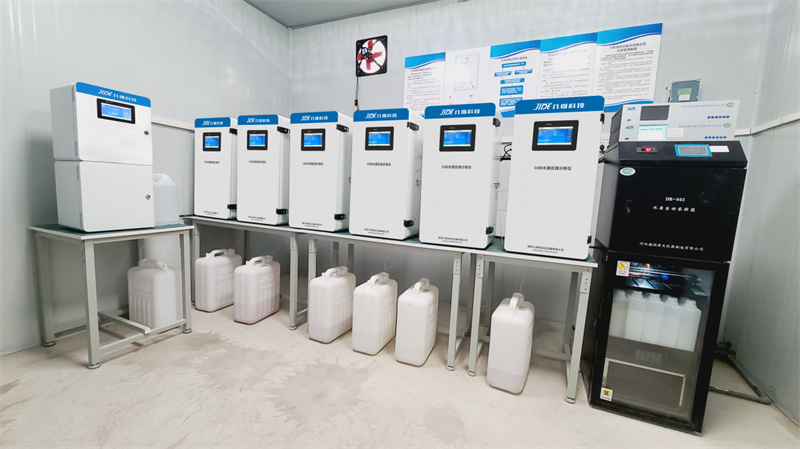
3) Why does COD need online monitoring? What are the limitations of laboratory testing?
Laboratory COD testing using the potassium dichromate reflux digestion method requires heating digestion for 2 hours, plus cooling, titration, or colorimetry, requiring at least 2–4 hours to obtain a single data point. This is the biggest problem with manual testing; severely delayed test results have no practical reference value. When laboratories detect excessive emissions or high-load shocks to the influent, the polluted water has already been discharged into rivers, or the biological treatment system has collapsed due to poisoning, completely negating its role as an "early warning" and "process guidance." In most developing countries, preventing factories from illegally discharging wastewater and causing mixed wastewater contamination of natural water bodies is a mandatory task for government environmental protection departments. COD is the most important reference value, but outdated data clearly cannot meet the needs.
Finally, laboratory sampling and testing require specialized technicians to handle reagents and titrations, consuming a significant amount of manpower, and human error is easily introduced by different personnel. Not only are personnel wages and training costs high, but the accuracy also lacks reference value.

2. Online COD Testing Methods
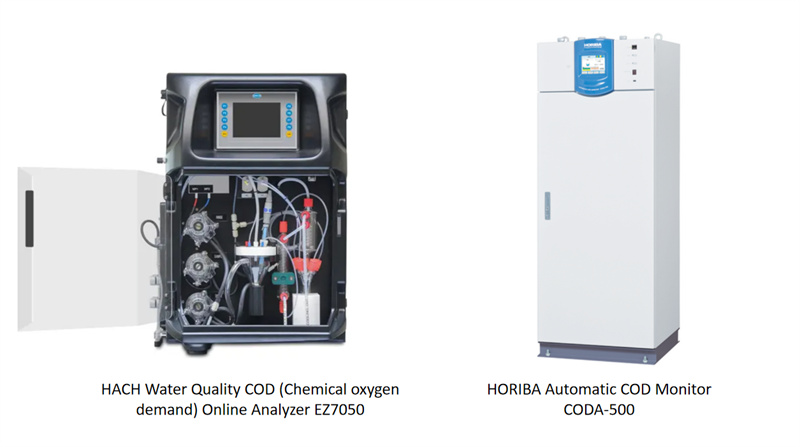
1) Chemical Digestion Method (Wet Chemical Method/Dichromate Method)
This is an authoritative and compliant standard method, a universal solution suitable for all complex water qualities, and the only method that can serve as a legally compliant basis.
Testing Principle: High-temperature digestion is performed first, followed by testing using optical/electrochemical methods.
An automated sampling system introduces the water sample into the reaction vessel, adding a strong oxidant (potassium dichromate, K₂, Cr₂, O₇), a catalyst (silver sulfate, Ag₂, SO₄), and a masking agent (mercuric sulfate HgSO₄, used to eliminate chloride ion interference). Digestion is carried out at 165°C under high temperature and pressure (usually 15–20 minutes) to completely oxidize the organic matter in the water. Then, the color change of hexavalent chromium (Cr₆⁺, yellow) to trivalent chromium (Cr₃⁺, green) is used. The COD consumption is accurately calculated using photometric colorimetry (usually at 610 nm or 440 nm wavelength) or electrotitration.
Core Advantages:
a. Strictly adheres to national and international standards, passing environmental equipment certifications stipulated by various countries, ensuring data has full legal and environmental regulatory validity.
b. Exceptional anti-interference capability; regardless of the complexity of the on-site water quality, the high-temperature digestion process eliminates complex macromolecular organic matter, preventing interference from suspended solids, turbidity, color, and particulate matter.
c. Wider testing range, especially in the monitoring of high-concentration industrial wastewater, exhibiting excellent linear measurement range.
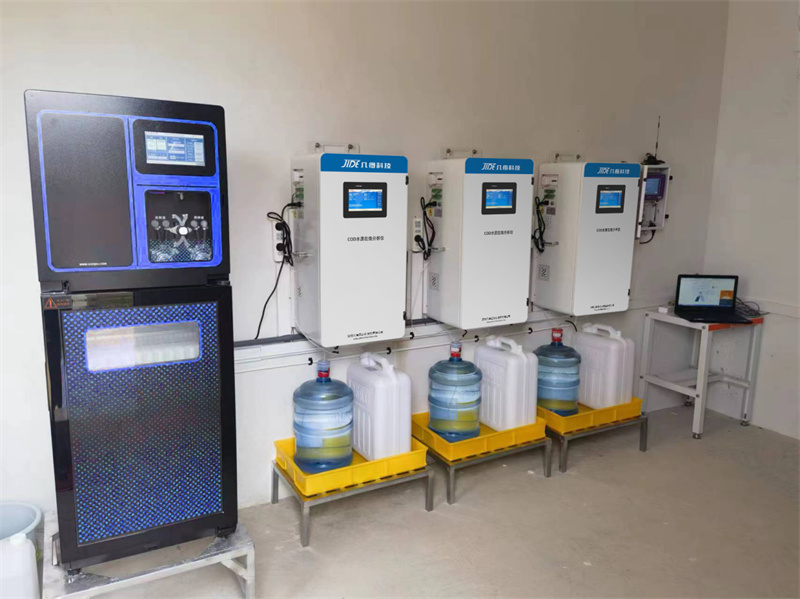
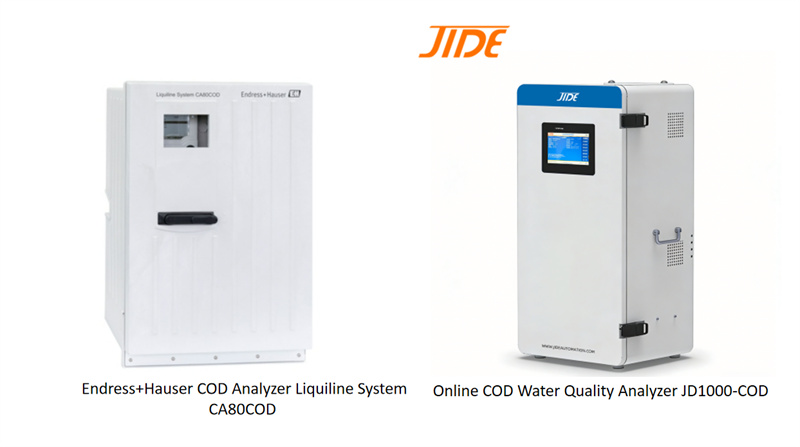
Limitations: Due to the high-temperature digestion process, the testing cycle takes approximately one hour, not providing data in seconds. Therefore, it is typically used in conjunction with water quality sampling/flow sampling instruments, requiring hourly data measurements and real-time water sample retention for future enforcement purposes. Furthermore, current COD chemical analyzers require regular replenishment of chemical reagents. Even though leading manufacturers like HACH, HORIBA, and JIDE have significantly reduced reagent consumption and wastewater generation, end-users still face challenges in wastewater treatment and long-term reagent procurement.
2) UV254 Ultraviolet Absorption Method (Spectroscopy)
A highly efficient and convenient "trend tool," a physical testing instrument for process control and early warning.
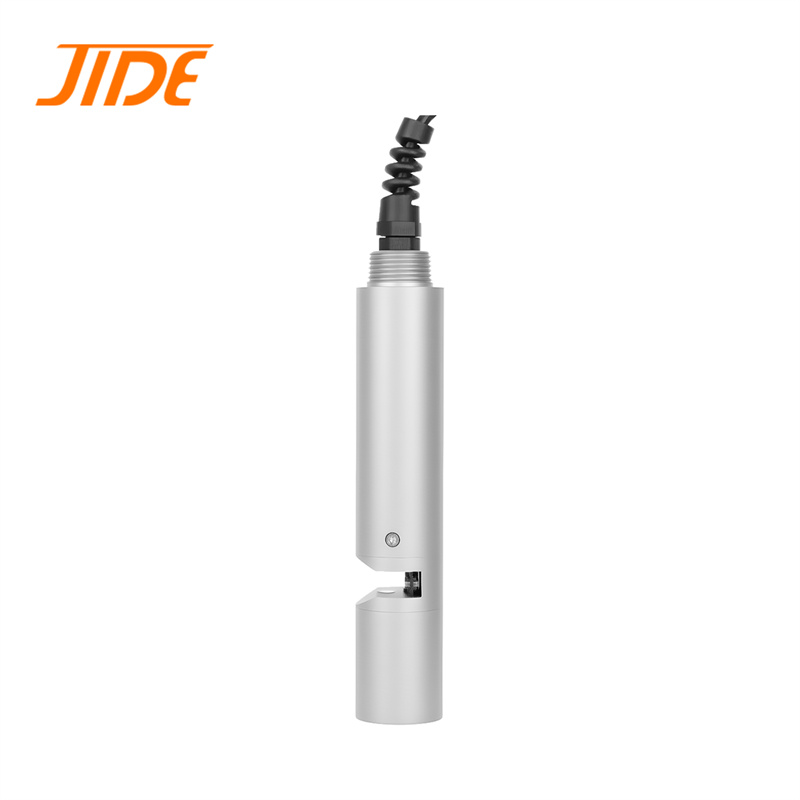
Testing Principle: Many dissolved organic compounds (especially aromatic compounds containing carbon-carbon double bonds (C=C) and benzene ring structures) have a strong absorption effect on ultraviolet light at a wavelength of 254 nm (UV254). Conversion Factor (SAC254 → COD): The sensor emits a beam of 254 nm ultraviolet light that passes through the water sample. The SAC254 (organic matter absorption coefficient) is calculated based on the light intensity attenuation. This is then multiplied by a specific water quality "conversion factor (K value)" to indirectly calculate the COD value.
You don't need to understand it in detail, as this principle almost cannot eliminate any optical interference. However, under stable water quality conditions, it can accurately reflect the trend of COD changes. This makes it widely used in testing environments with relatively stable water quality, such as rivers and lakes, and in wastewater treatment plants where real-time trend monitoring is crucial. However, it cannot be used in complex situations with stringent accuracy requirements, such as at pollution source discharge outlets.

Core Advantages:
a. True second-level monitoring and real-time response, eliminating the need to wait for the digestion process, making it ideal for monitoring COD trends during wastewater treatment. The sensor will sensitively detect any significant fluctuations.
b. Pure optical detection, requiring no reagents. This is the source of the claim that maintenance costs differ by five times. Currently, leading international brands such as HACH, ENDRESS, and JIDE offer COD sensors that require no consumables, produce no waste liquid, and have extremely low operating costs. How to reduce COD waste liquid treatment costs? Please see more articles on our website.
Limitations: Monitoring results are easily interfered with, especially under complex conditions. Because UV254 can only detect organic matter that absorbs ultraviolet light, some alcohols and polysaccharides do not react to ultraviolet light; or the water itself may have very high suspended solids, causing ultraviolet light scattering, all of which affect measurement accuracy. Therefore, COD sensors are typically used for trend testing or in applications with good water quality, such as clear surface water.
3. Summary
In short, chemical methods are the true king of compliance, the only method for rigorous testing, but they also have higher maintenance costs. We recommend using products from reliable first-tier manufacturers. Ultraviolet (UV) sensors are powerful tools for continuous testing and trend monitoring, suitable for monitoring applications requiring high response speed but not high accuracy.
Additional Explanation: Difference between BOD and COD:
BOD (Biochemical Oxygen Demand): The amount of dissolved oxygen consumed by microorganisms in decomposing organic matter (biodegradable portion) in water under aerobic conditions.
COD (Chemical Oxygen Demand): The amount of oxidant consumed by strong chemical oxidants to oxidize organic matter (and reducing substances) in water under acidic/high-temperature conditions.
Both reflect the content of organic matter in water. However, BOD5 requires 5 days of incubation to produce results, making it unsuitable for real-time early warning and process control of water quality anomalies. Furthermore, BOD measurement is extremely sensitive to microbial activity and toxic substances. If the water sample contains heavy metals, strong acids or alkalis, or bactericides, it can lead to microbial death and a false low BOD value (false negative). Therefore, the mainstream market currently widely uses online COD monitoring as the core control indicator, or establishes specific B/C ratio correlation curves to guide production.